Hyperpigmentation is one of the most common skin concerns, affecting people of all ages and skin types. Characterized by dark spots, uneven tone, or patches of discoloration, it is often caused by sun exposure, hormonal changes, inflammation, or post-acne scarring. With advancements in modern aesthetics, two leading treatments have emerged as effective solutions: laser therapy and chemical peels.
This article provides a comprehensive comparison of these treatments, helping you decide which option is best for your skin type, goals, and lifestyle.
Understanding Hyperpigmentation
Hyperpigmentation occurs when melanocytes, the cells responsible for producing melanin, become overactive. This leads to an excess of pigment in certain areas, resulting in visible dark spots or patches.
Types of Hyperpigmentation
- Sunspots (Solar Lentigines): Caused by prolonged sun exposure.
- Melasma: Often hormone-related, common during pregnancy or with birth control use.
- Post-Inflammatory Hyperpigmentation (PIH): Occurs after acne, injury, or inflammation.
Laser Treatments for Hyperpigmentation
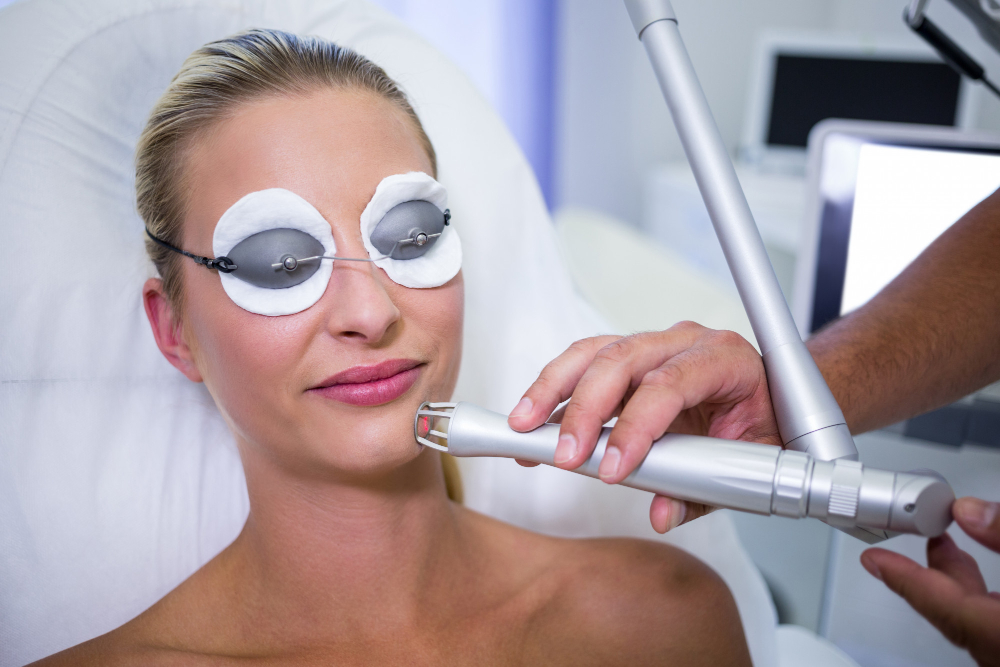
Laser technology has revolutionized the way pigmentation is treated. These devices use concentrated beams of light to target excess melanin and break it down, leaving skin clearer and more even-toned.
How Lasers Work
- Lasers deliver controlled energy into the pigment clusters.
- The pigment is fragmented and naturally eliminated by the body.
- Stimulates collagen production, improving skin texture alongside tone.
Types of Lasers Used
- Fractional Lasers: Target deeper layers of the skin for stubborn pigmentation.
- Q-Switched Lasers: Focus on breaking up pigment particles without harming surrounding skin.
- Nd:YAG Lasers: Especially effective for darker skin tones and deep pigmentation.
Benefits of Lasers
- Precise targeting of pigmentation.
- Fast results with fewer sessions.
- Can improve both tone and texture.
Considerations for Lasers
- May involve downtime (redness, swelling, peeling).
- Can be more expensive than peels.
- Risk of hyper- or hypopigmentation if not performed by a trained professional.
Chemical Peels for Hyperpigmentation
Chemical peels use acidic solutions to exfoliate the top layers of skin, removing pigmented cells and promoting regeneration of new, healthier skin.
How Peels Work
- Exfoliate damaged outer layers.
- Encourage cell turnover and collagen production.
- Reveal smoother, brighter skin underneath.
Types of Peels for Pigmentation
- Superficial Peels: Use mild acids (glycolic, lactic) for light pigmentation.
- Medium Peels: Use stronger acids (TCA, Jessner’s solution) for more stubborn discoloration.
- Deep Peels: Penetrate deeply to treat severe pigmentation but require significant downtime.
Benefits of Peels
- Affordable compared to laser treatments.
- Minimal downtime for lighter peels.
- Improves overall skin texture and radiance.
Considerations for Peels
- May require multiple sessions for visible results.
- Not suitable for very deep pigmentation.
- Stronger peels can cause irritation or prolonged recovery.
Lasers vs. Peels: Which Is Right for You?
Lasers May Be Better If:
- You have deep, stubborn pigmentation resistant to other treatments.
- You want faster, more noticeable results.
- You’re also looking to improve skin texture and fine lines alongside pigmentation.
Peels May Be Better If:
- Your pigmentation is mild to moderate.
- You prefer a cost-effective solution.
- You want to gradually improve your skin with little to no downtime.
Combination Approach
In many cases, providers may recommend combining lasers and peels for optimal results. For example:
- Chemical peels to resurface and prep the skin.
- Laser therapy to target stubborn pigmentation underneath.
This holistic approach often delivers more dramatic and longer-lasting improvements.
Lifestyle & Aftercare Tips for Pigmentation Control
Regardless of whether you choose lasers or peels, proper aftercare is essential:
- Daily SPF: Prevents new pigmentation from forming.
- Medical-Grade Skincare: Products with retinol, vitamin C, or hydroquinone can maintain results.
- Healthy Lifestyle: Staying hydrated, avoiding smoking, and eating antioxidant-rich foods support skin healing.
Consulting with Experts
Choosing between lasers and peels depends on your skin type, pigmentation severity, budget, and desired downtime. Consulting a qualified provider ensures you receive a personalized treatment plan tailored to your needs.
Contact Believe Aesthetics for Hyperpigmentation Solutions in San Antonio
At Believe Aesthetics & Wellness, we specialize in customized treatments for hyperpigmentation, offering both advanced laser therapies and chemical peels. Our expert team evaluates your skin concerns and recommends the most effective solution—whether it’s a single treatment or a combination approach—to give you a clear, glowing complexion.
Take control of your skin today—schedule your consultation at Believe Aesthetics in San Antonio and discover which treatment is right for you.
SEO Details
- Slug: hyperpigmentation-solutions-lasers-vs-peels
- Meta Title: Hyperpigmentation Solutions: Lasers vs. Peels | Believe Aesthetics
- Meta Description: Compare lasers vs. chemical peels for hyperpigmentation. Learn which treatment works best for your skin type at Believe Aesthetics in San Antonio.
- Category: Skin Treatments, Hyperpigmentation Solutions
- Tags: hyperpigmentation, laser therapy, chemical peels, dark spots, melasma, sun damage, acne scars, skin rejuvenation, Believe Aesthetics